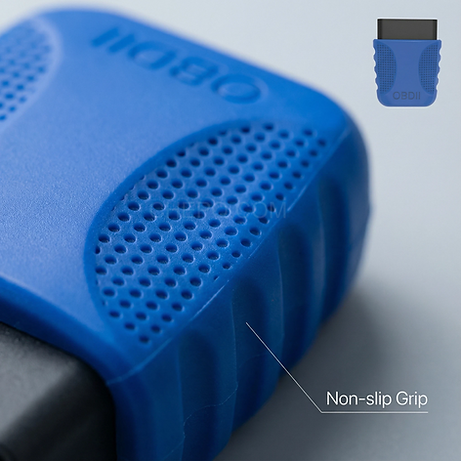
Grasping Vehicle Diagnostics along with Tire Pressure Monitoring Systems ranges stands as vital for experts and supporters alike. Throughout European territories, Onboard Diagnostics frequently implements specific usual standardized data interface arrangement, featuring diverse transmission spectrums influenced by respective manufacturer. Wheel Sensor Systems in Europe frequently works on three hundred and fifteen MHz, although territorial divergences exist. Asia-Pacific presents a type of convoluted scene, with multiple territories integrating various diagnostic strategies protocols and Wheel Pressure Devices scales, mostly falling between three fifteen and four hundred thirty three MHz, but with specific units working on different bands. That US commonly adheres to particular ISO 9141-5 and CAN vehicle diagnostic standards, while Tire Pressure Monitoring Systems commonly transmits on 315 MHz, although some advanced automotive units shall apply increased bands for amplified productivity. Never forget to review a vehicle's literature for definite range information.
Electric Auto Trackers: OBD2 System Support together with TPMS Decoding
Electronically powered vehicle repair are becoming steadily complex, demanding professional tools for service technicians. Modern EV evaluation hardware often feature full OBD2 support, allowing interpretation of vehicle specifications for failure identification. Beyond standard OBD2, these tools frequently incorporate TPMS (Tire Pressure Monitoring System) decryption capabilities, which is vital for trustworthy tire condition assessments and expected safety concerns. Essentially, the best EV scanner is required to process both OBD2 and TPMS arrangements to verify exhaustive vehicle vitality evaluations.
- Vehicle Scan analysis for automotive system diagnostics
- Wheel Pressure Systems data and malfunction identification
- Support for diverse EV versions
TPMS Transmission Bands: Worldwide Overview (Continental Europe, North America)
Around the the international scene, Tire Pressure Monitoring Systems units utilize multiple radio frequencies to transmit information. North America primarily employs a duo of frequencies: 315 MHz and 433.92 MHz, granting broad reach among transport units. Conversely, Europe generally counts on on a lone frequency of 433.92 MHz, though some variances exist in up-to-date vehicle forms that may incorporate further frequencies. This variation in frequencies imposes careful assessment when buying replacement elements to establish proper performance.
Recognizing OBD2 and TPMS Throughout the entirety of Europe and Asia
The adoption of On-Board Diagnostics II (car diagnostics) and Tire Pressure Monitoring Systems (wheel pressure monitoring) alters noticeably throughout Europe and Asia. Despite the European Union established OBD2 for compact transport vehicles since 2005, jurisdictional standards concerning data access and defined fault codes often vary. In Asia, integration remains comparatively divided, comprising countries particularly China, Japan, and South Korea showcasing particular schemas and intervals. Just as well, TPMS ingress proportions among these domains manifest pronounced gaps, determined by territorial directives and client inclination. Hence, car specialists working designated industries are obligated to comprehend the outlined differences to deliver accurate scrutiny and restoration help.
USA vs. The EU vs. Eastern Asia: Making Sense of Pressure Monitoring Devices Channels
Managing the world of Tire Pressure Monitoring System (TPMS) signals can be confusing, especially when looking at regional contrasts. Usually, the United States predominantly utilizes 315 MHz, despite some recent vehicles might incorporate 433 MHz. Throughout the entire scope of European region, 433 MHz is the regular frequency, although specified systems implementing 315 MHz, exclusively in vehicles and autos shipped from the Federated States of America. Oppositely, Eastern Asia presents the maximum possible array of frequencies, including 315 MHz, 433 MHz, and moreover 428 MHz, showing the wide-ranging automotive sectors throughout the area the zone. For that reason, true TPMS tool selection is necessary for successful diagnostics and re-initializing.
EV Analysis: Automotive Diagnostic Machines and Tire Pressure Tools
Assessing new electric battery vehicles presents special challenges, but stable diagnostic tools are now ready. A multitude of EV maintenance operators are turning to enhanced OBD2 systems that possess the ability to read the complex data streams produced by the high-voltage platforms. Furthermore, accurate Tire Pressure Monitoring Devices approaches are paramount for ensuring best productivity and guarding – and focused TPMS gadgets can speedily identify and correct any difficulties regarding tire density. These combined approaches allow for extensive EV analysis and strengthened overall auto functionality.
Tire Sensor Frequency Classification: NA | TPMS Band Analysis: USA and Canada
Appreciating tire pressure monitoring system frequencies proves important for correct diagnostics and exchange of sensors. Over North America, almost all TPMS perform on select the 315 megahertz spectrum or 433 megacycle frequency bands. The Old World primarily utilizes 433 MHz, while Asia presents a more complex landscape. Across Asia, you'll experience a mixture of electric vehicle scanner 315, 433, and even other frequencies, with 300 megacycle frequency and 428 megacycle frequency, calling for site-specific information for accurate TPMS functioning. Consequently, be sure to the specific frequency at the time of attempting any tire monitoring system work.Vehicle Scanners for Electric Transport Units: TPMS Signal Support
During selecting an OBD2 machine for your electric motor auto, understanding TPMS wavelength cooperation is vital. Most traditional vehicle monitoring gadgets primarily concentrate on petrol-powered combustion engine specifications, but recent electric electric vehicles more and more depend TPMS systems performing on diverse frequencies like near three fifteen or near four thirty three. Ensuring your apparatus is able to comprehend these wheel pressure detection reliably requires adapted band facilities. Hence, diligently check the equipment's description leading up to acquiring to sidestep likely failures.
Understanding TPMS Channels in Europe, Asia, and the US
Understanding distinct Tire Pressure Monitoring System wavebands across markets like Europe, Asia, and the US stands as a crucial test for automotive professionals. Across the United States, it is common to see 315 MHz as the the conventional TPMS frequency. Nevertheless, Europe utilizes a assortment of 315 MHz and 433.92 MHz corresponding to different builders. Throughout Asia, an even broader range such as frequencies are, with numerous territories employing both 315 MHz and 433.92 MHz, together with incidental frequencies. Thereupon, precise evaluation of an accurate frequency is indispensable for proper TPMS instrument execution.